

Free online Learning Environment for public education
Most higher education programs prepare students for their future role in a management position in the economy, but they still lack a component on Service Management – and all organizations are service providers nowadays. As a consequence, many graduati

Tool selection: blindfolded or new spectacles?
A few days ago, the LinkedIn group [ITIL & ITSM tools] showed an interesting post: “I am looking to replace the existing ITSM tool being used in my organization. Looking forward for some suggestions.” As can be expected, several group members came

Why user errors are not incidents (blog)
Case 1: A user reports “I lost my password, can you reset it for me?” Case 2: A user reports “I lost the key to my locker, can you get me a new one?” Case 3: A user reports “I made an incorrect entry in application X, and now my data is corrupted, can

Has architecture taken the wrong turn?
It seems that most architects are now also designers as well as developers, and spend more energy discussing and describing the technology results than discussing the principles and methods that make architecture. In my world, architecture should start

Compliance to ISO: the world upside down
The old way of handling ISO standards is built on the idea that complying with requirements would deliver sustainable improvements. It does not. It only nails down the inefficiencies of your practices. Audits normally start at the side of the requireme

Make Enterprise Service Management (ESM) simple with USM
Service management is managing services. If you want to deliver services in a systematic way, you’ll need a management system. The scope of the required management system is often a team, a department, or a business unit. Organizations that extend this
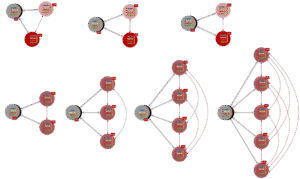
Devil’s Triangles in Service Management, and how to avoid them (blog)
Devil’s Triangles lead to poor cooperation between parties. And the customer – the user organization – usually is the victim. A systematic approach to service management helps you prevent the devastating effect of Devil’s Triangles. In service manageme

“Service”: 100+ horrifying definitions
“Any idea what a service is?” Just imagine you don’t have a solid answer to that question. Or imagine that different answers are given within your organization… How would you respond to the following question: “And how do you think you will manage you

MTBF – MTRS – MTBSI – MTTR? What happened?
Reviewing an exercise text for a local university, I ran into an issue that seems to be overshadowed by all attention for the new ITIL 4 terms like SVS, value chain, co-creation etc. What has become of the availability measures we used for some decades